"What to Aiken’s mind has always been a matter of betrayal from Kelly when she left town and eventually married after Aiken joined the army, Kelly’s perspective shatters his sense of self. Their last love-making moment, she considers rape."
Sunday, August 16, 2020
Moazzam Reviews Clifford Garstang's The Shaman of Turtle Valley for Heavy Feather Review
According to one view, America keeps a certain part of its population illiterate and poor, Whites and non-Whites, on purpose to be used as cannon fodder for its imperial wars around the globe. Without any regard for their well-being afterwards if they’re lucky enough to return in one piece. It is not rocket science to see the connection between the Korean War and onward to a rising number of veterans ending up homeless on American streets, begging or going insane. So it is only natural that Aiken, the younger son of Henry and Ruth, joins the army to be deployed to Kuwait and Iraq around Desert Storm. Luckily his deployment is short, though he has his share of war trauma but it has spared him more or less. Before he can quit the army, however, his second deployment takes him to South Korea, where he befriends an underage young woman interested in practicing her English with American soldiers and gets her pregnant towards the end of his tenure.
Saturday, August 8, 2020
My Re-evaluation of noted writer Altaf Fatima's Urdu Novel Chalta Mussafir
A historian’s focus is on facts extracted from primary or secondary sources offering a counter-narrative. For example, in the US ‘the no taxation without representation’ narrative persists. Some historians have however argued that the fear of losing slaves caused the revolution. There were slave rebellions. Then King George III issued the Royal Proclamation of 1763, forbidding white settlers from usurping more land from the natives.
Historian Gerald Horne argues that the revolution was, in fact, a counter-revolution spelling disaster for African Americans and Native Americans. When novelists enter the fray, they draw a narrative arc with ordinary humans at the centre. Altaf Fatima’s novel Chalta Mussafir was written about a decade after Pakistan army’s unconditional surrender in Dhaka.
Except for the weak ending, I loved her book Daskat Na Do (The One Who Did Not Knock, translated finely by Rukhsana Ahmed) for its diction and for situating two outsiders at the heart of the story. One would think that a decade was a long enough time to gain perspective about an emotionally charged moment in history, and weigh official and unofficial narrative and counter-narratives to offer an undidactic lens. An equal number of Hindus and Muslims don't have to die and en equal number of perpetrators of violence should not should not also be lined up. Since no one has a complete grip on the truth, the author must look far and wide.
Read the rest Here
Monday, March 2, 2020
My review of I'm From Nowhere by Lindsay Lerman
Towards the end of Ishiguro’s The Remains of the Day, Stevens, the chief butler at Darlington Hall, reconciles himself to the realization that by agreeing to live a subservient life, he couldn’t even make his own mistakes. “Really, one has to ask oneself, what dignity is there in that?” Lindsay Lerman’s central character, Claire, of her powerful debut novel I’m From Nowhere, struggles with a somewhat similarly existential pang when John, her husband, suddenly passes away at a young age. In Lerman’s sensitive and compassionate hands, Claire juggles, for days since John’s death, the twin emotions of grief and identity crisis. Claire is barely thirty years old. That only complicates emotions further. Two of their friends, Andrew and Luke, are present at the funeral silently polishing their sexual and/or romantic bait. Both men, in the past, have made their attraction to her clear, risking their friendship with John. That Claire never confided in her husband about Andrew’s advance or Luke’s love letter lest that rupture the friendship among men, served to prop up her self-esteem, which serves, in essence, as the novel’s dominant, if not central, theme.
You can read the entire review here.
Tuesday, November 12, 2019
A Punjabi short story by Virk
Milk
![]() |
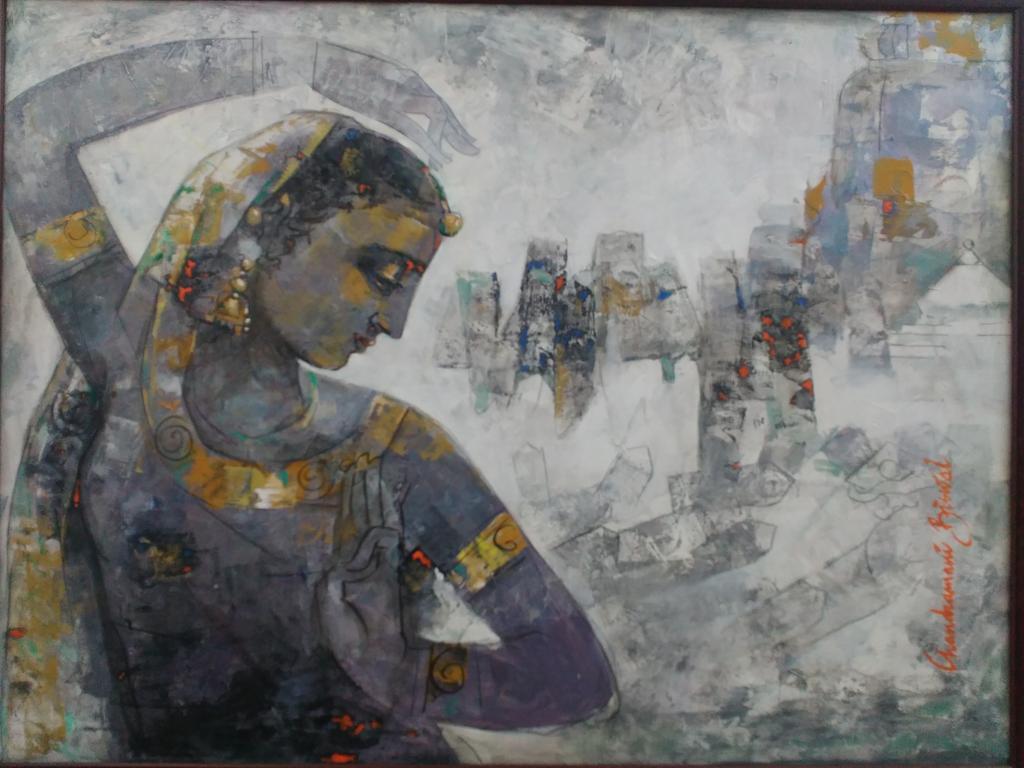
| artwork by Shahid Mirza |
Those who’d seen believed Kamla to be twenty to twenty-five years old. In reality her age
lay somewhere between thirty and forty. The age deception resulted mostly because of her
well-kneaded figure; she wasn't plump or thin, neither too tall nor short. Since white attires sat well
on her lighter skin, that’s what she’d often wear. Although she wasn’t that young anymore, a
man approaching her from behind couldn’t resist getting his fill of her.
Those who toil away in offices have limited words for gossip, bragging. Their experience is
restricted. Heads bowed, scribbling words down on paper isn't worthy of much. Kamla’s husband
Manmohan Lal, however, could brag on account of his wife. His wife stood a class apart on account
of her beauty whether it was at a gathering or a train station while seeing off a fellow officer
being transferred, or some other occasion happy or sad where men and women had gathered.
Manmohan Lal couldn’t contain himself within his clothes.
He was rightfully proud of her. Besides being attractive and well-mannered, her character was
also beyond blemish. Those who kept news did gossip about the wives of others, but never a
word about Kamla. There was nothing to talk. Manmohan Lal went on official trips occasionally
to check on accounts of offices in other areas. Those trips could last awhile. Eight, ten days. Kamla
did feel lonely, bored. The life of a wife is no life without the husband. The house seemed like a
circus devoid of an elephant or a wedding procession without a groom.
It’d been five days since Manmohan went away. Three more days before he returned – days heavy
as mountains, days bereft of taste. The house, food and everything around her was the same as
usual, but Manmohan’s absence turned the days into milk from which cream had been extracted.
An old milkman used to come by to deliver milk, once in the morning and once in the evening.
He’d put down his bucket next to the kitchen door. He’d release the handle of the bucket from
his grip, letting it bang against the metal rim. That’s how he announced the event of his
arrival.
“Get you milk!” he'd holler. Holding the container, a maidservant would emerge from the
kitchen and he’d start pouring milk into her container. One would then hear the thumping sound
of his slipper retreating and the play would come to an end.
Wednesday, October 23, 2019
A Poem by Athena Kashyap

Together, we entered hushed halls packed
Thursday, September 12, 2019
Act of liberation or trap
Immigrant dreams

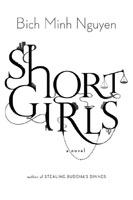
| Author Bich Minh Nugyen |
Act of liberation or trap
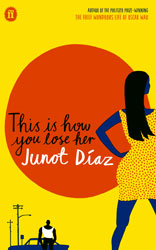
Diaz’s stories and their characters cannot be fully appreciated without understanding the place called Dominican Republic
By Moazzam Sheikh